My Experience on an Archaeology Dig
I didn’t think I would get to dig this summer.
My university was running a field school in British Columbia, but I wasn’t able to join. I ended up travelling all the way back home for the summer.
I was disappointed, as I had spent most of the year dreaming about learning to identify house depressions. But if there is any force that’s stronger than archaeological curiosity, it’s financial limitations.
This is why I did a little jump for joy when a local archaeology site—a suspected tool-making site from the late woodland period—was running a public archaeology dig during the local college’s field school. I signed up, figuring I’d take any experience I could get, and it ended up being the highlight of my summer.
An intro to public archaeology
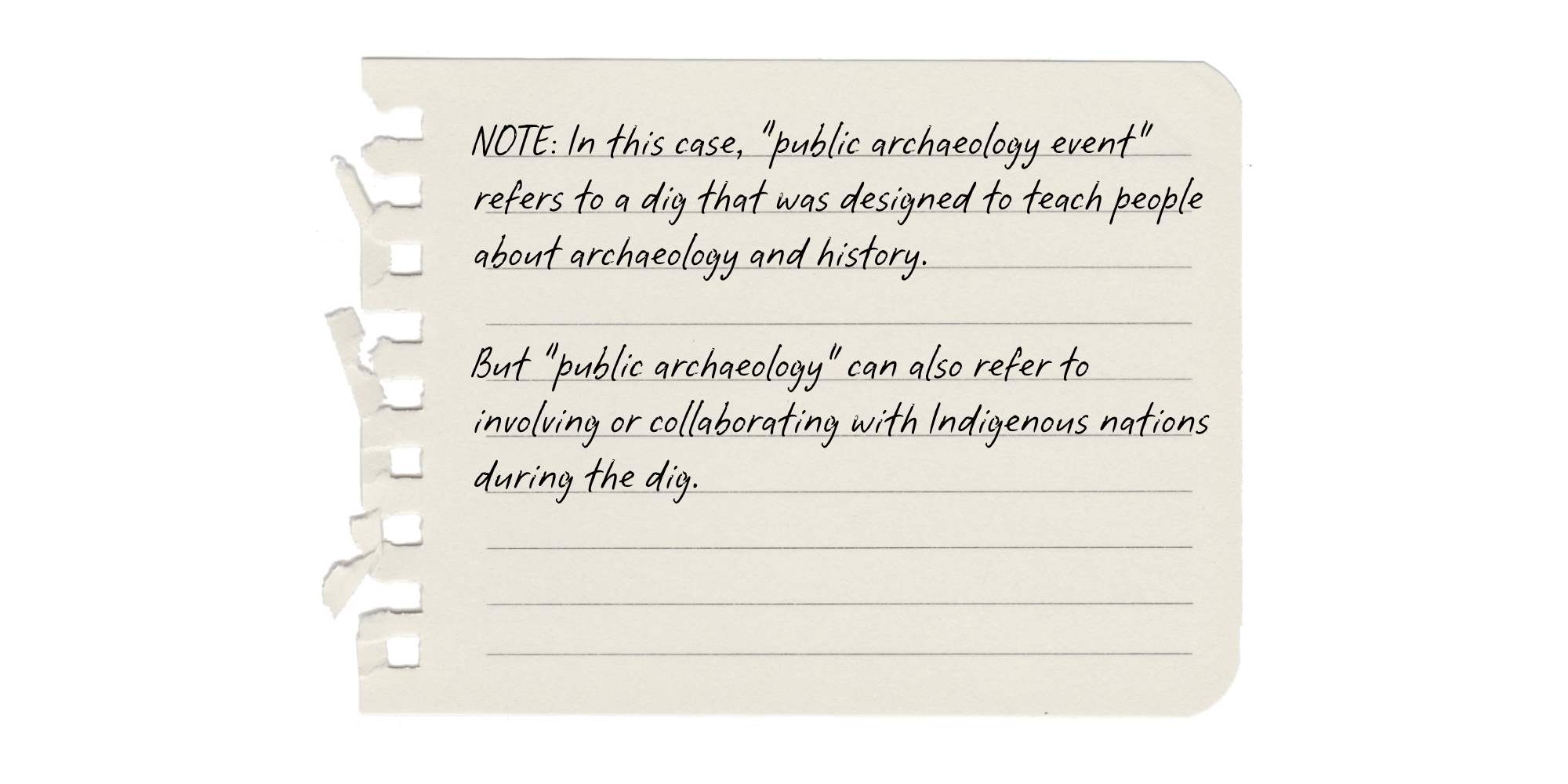
Public archaeology gets the community involved in local history through education and action.
Public archaeology events are typically held during an active dig. People are invited to work on the site and learn about archaeology.
This event was held at a local historical center that also had a paleontology site, years of previous digs, and an asshole golf course next door that wouldn’t let any work happen on their side of the field.
Arriving at the site
I was directed towards a staked out unit – a 3x3 square on the grass – that was entirely for the public to dig. Notably they had done some testing and knew the likely hot spots for artifacts, which they gave to the students (as they should, considering students are paying wild field school prices) instead of the public.
I worked for about 12 hours over two days, during which I dug out the top soil of the unit (which is all organic material like grass and roots), scraped down to 20cm, and did some shifting.
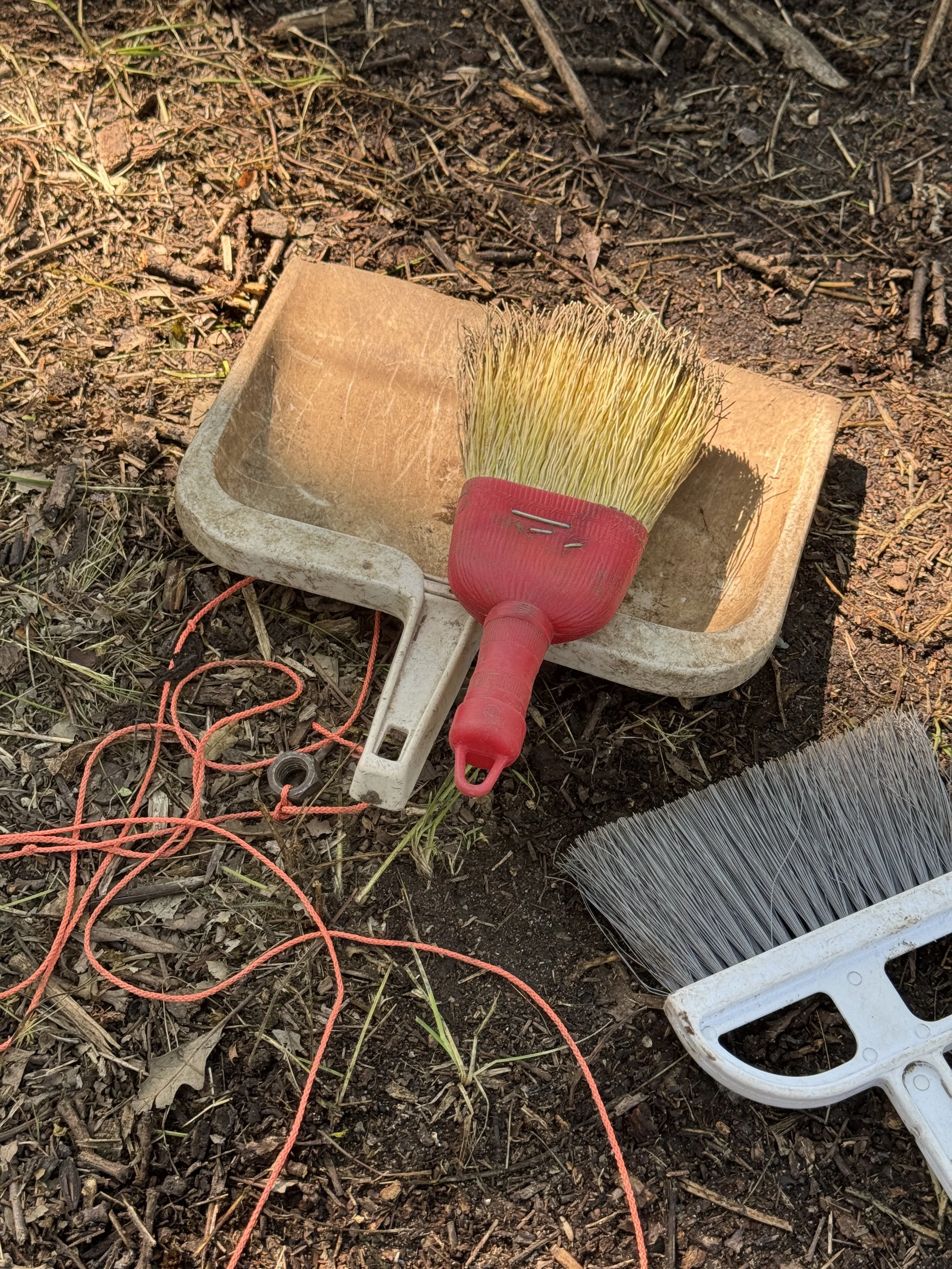
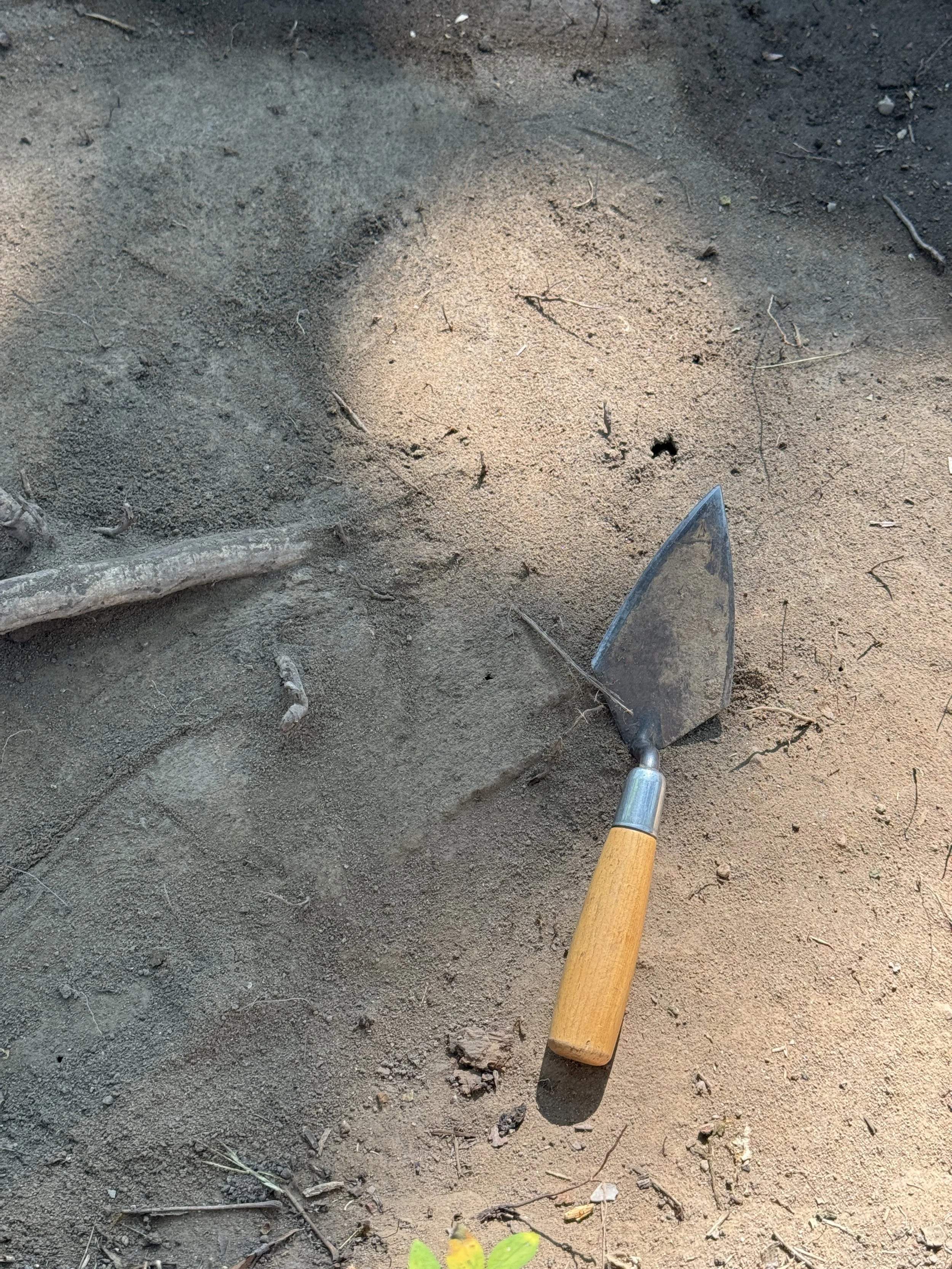
Scraping 10-20cm may not seem like a lot, but when excavating a unit you don’t dig–you scrape with a trowel. This way you’re not disturbing anything under the sediment. Using a shovel to dig a hole straight down could completely destroy a fire pit, or accidentally crack a stone artifact in half.
Using this slower method, any finds can be brushed off gently, and then they’re recorded before they’re moved into a box (or bag or tupperware or whatever).
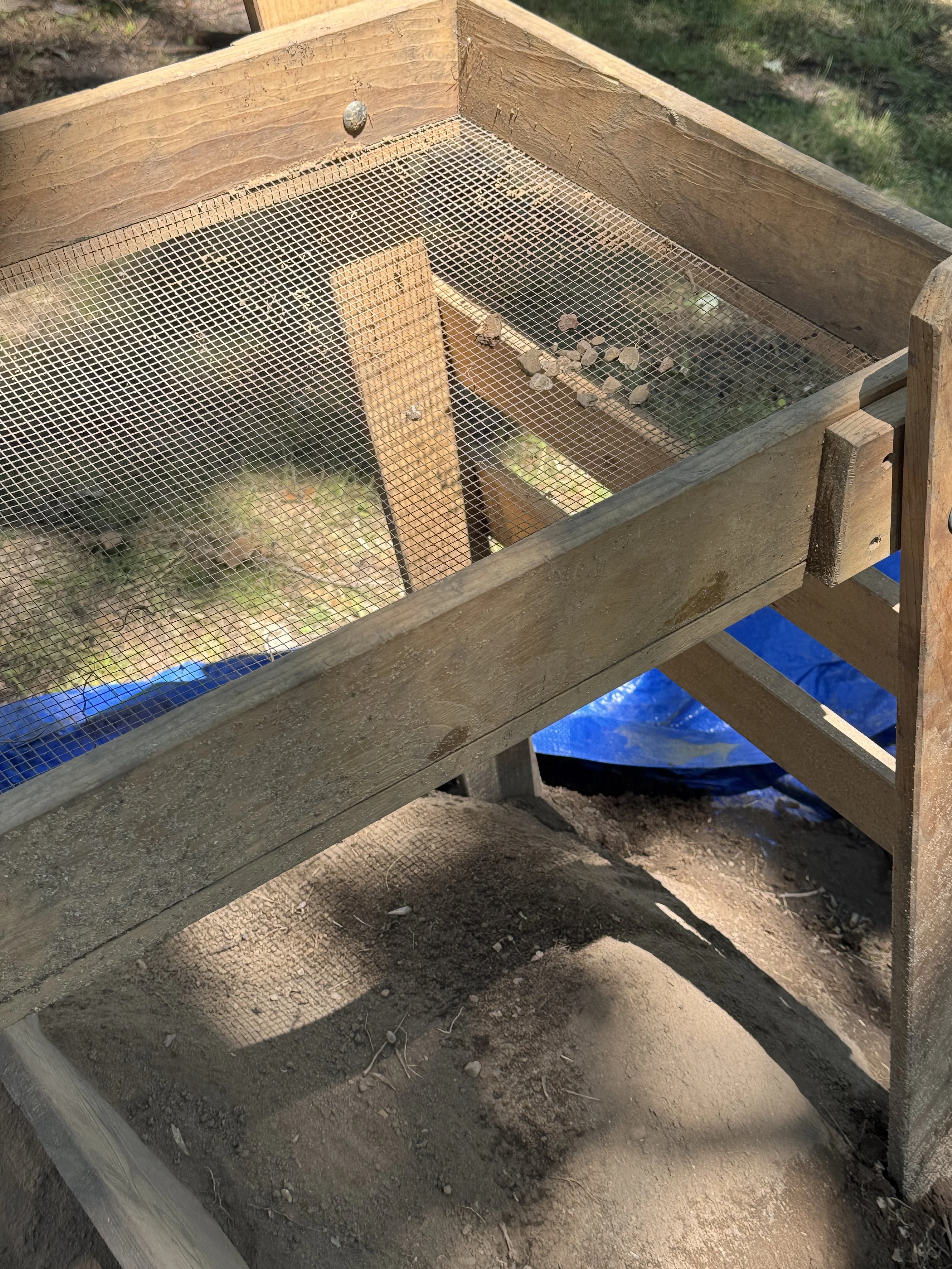
Shifting, or sieving, is where you take the dirt that’s been scraped up and run it through a sieve. This helps to find anything small, like burned organic pieces or worked rocks, that were too small to see while scraping.
Who I met on the archaeology site
The work I’ve described may sound boring and tedious, but when you have an 80s playlist in the background and people to talk to it’s actually rather fun!
The first person I met was the lead archaeologist of the field school. He specialized in paleoclimate recreation and he was very eager to talk about paleomagnetism (I later learned he had appeared on one of Graham Hancock’s shows—a fact that baffled me in many ways).
There was also a team of college students, a couple amateur archaeologists from the historical society, a palaeontologist getting their masters in anthropology, and other volunteers who were as excited to dig as I was.
The entire experience was incredibly welcoming. Everyone wanted to say hi and show me what arrowheads they found on other work days. I got lots of gossip from the palaeontologist on the local museum. When they found out I was an archaeology student, they were all too happy to skip the basics.
They explained exactly how things worked, how to record finds, and why everything was happening. They even invited me back for another work day so I could get some more experience digging another 10cm.
My point here is that a dig has all kinds. There is a good chance that not everyone on the site is an expert. Don’t skip an archaeology event just because you’re not experienced.
Some of my most exciting finds
Let’s be real: the exciting part is what is dug up. I wouldn’t blame you if you skipped the rest of the page to get to this section. The first day I dug and didn’t find anything…only to be sent photos of jewelry they found after I left. This was a rough, but realistic, introduction to the fact that sometimes cool things don’t happen until after you leave.
Luckily, after I was invited back to dig another 10cm, I struck gold. And by gold, I mean chert.
Flakes and Debitage
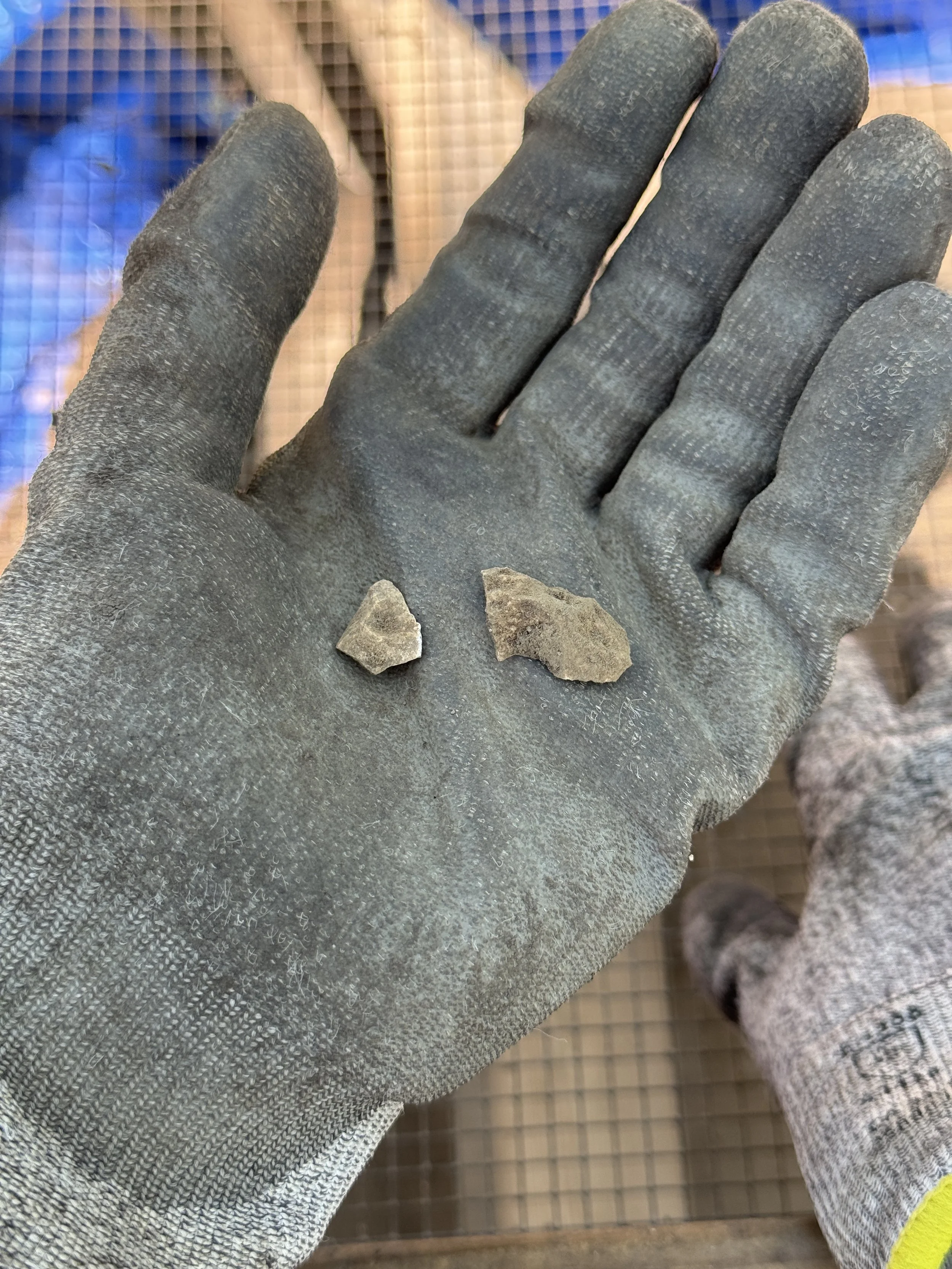
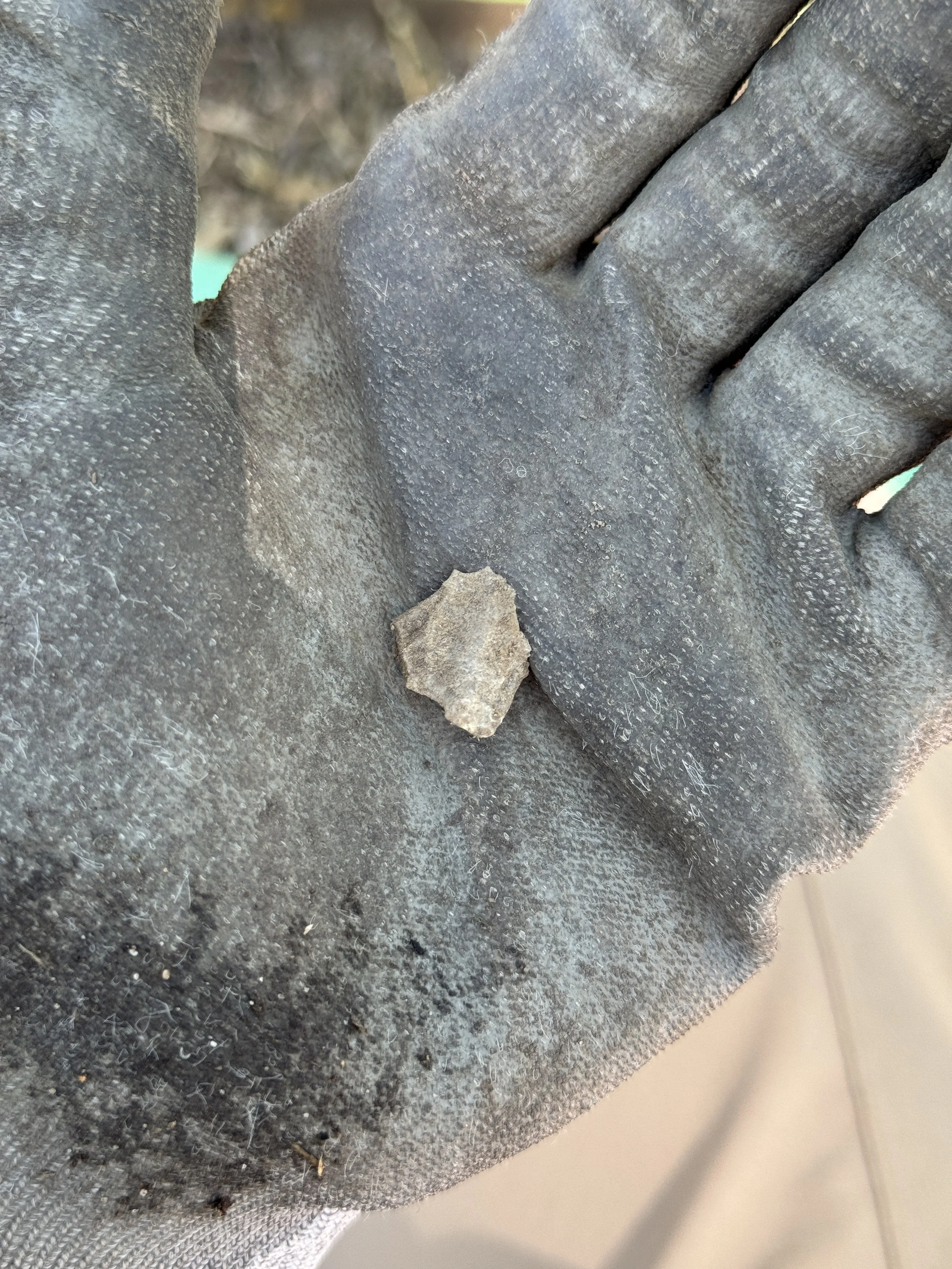
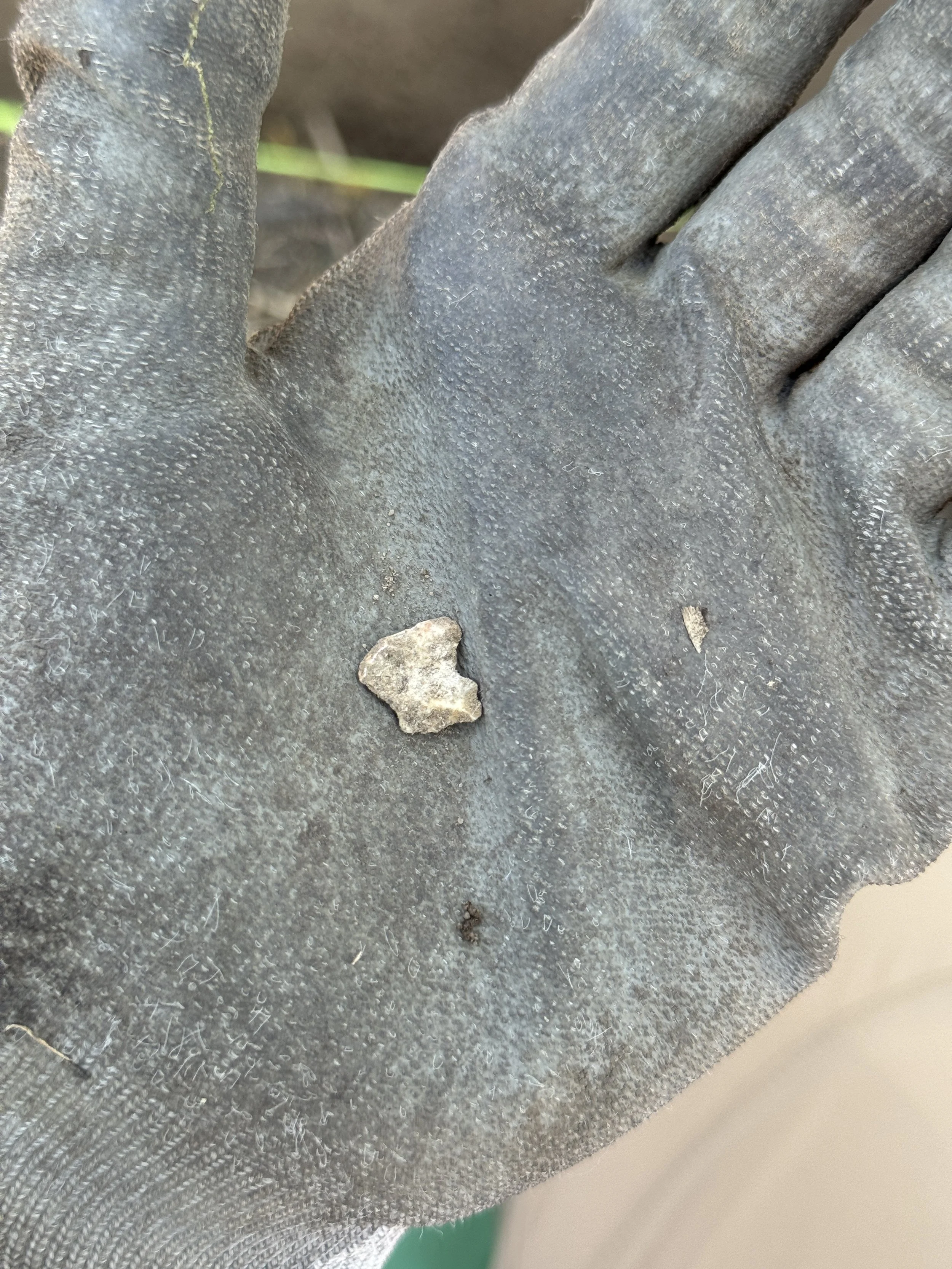
These are lithic debitage. That means that these were flakes that were flint knapped. In this case, they were likely discarded after being knapped.
I could tell they were worked by humans because of the flake scars where pieces came off after being worked. I don’t know for sure if these are flakes, but after taking a semester of lithics study I feel fairly confident.
Cores
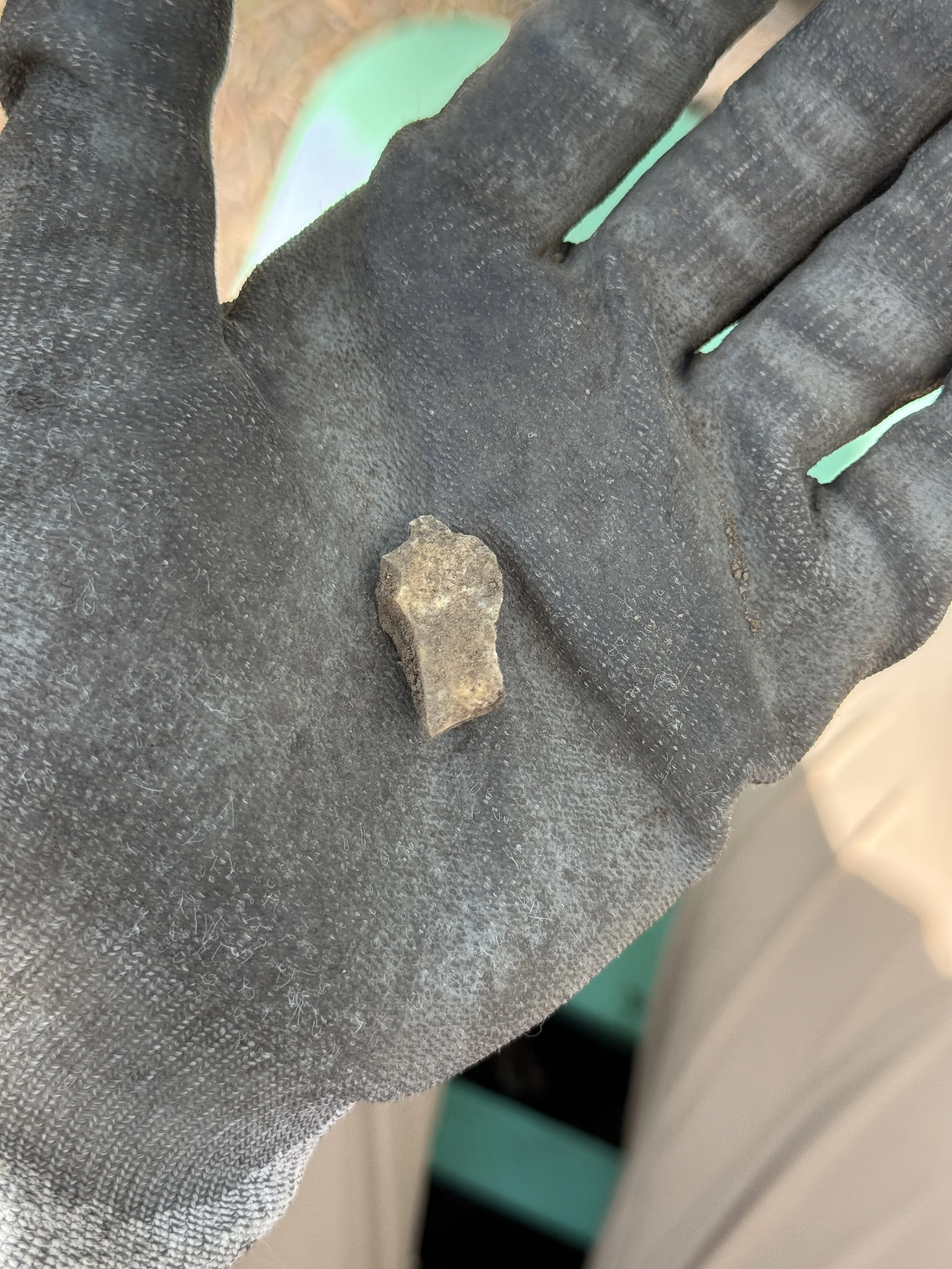
The image on the left was suspected to be a core. After flint knapping, when flakes are taken off a rock, what’s left is called a core. Some of the lithics in the sieve may also have been cores, but it was unclear.
An Ash Pit
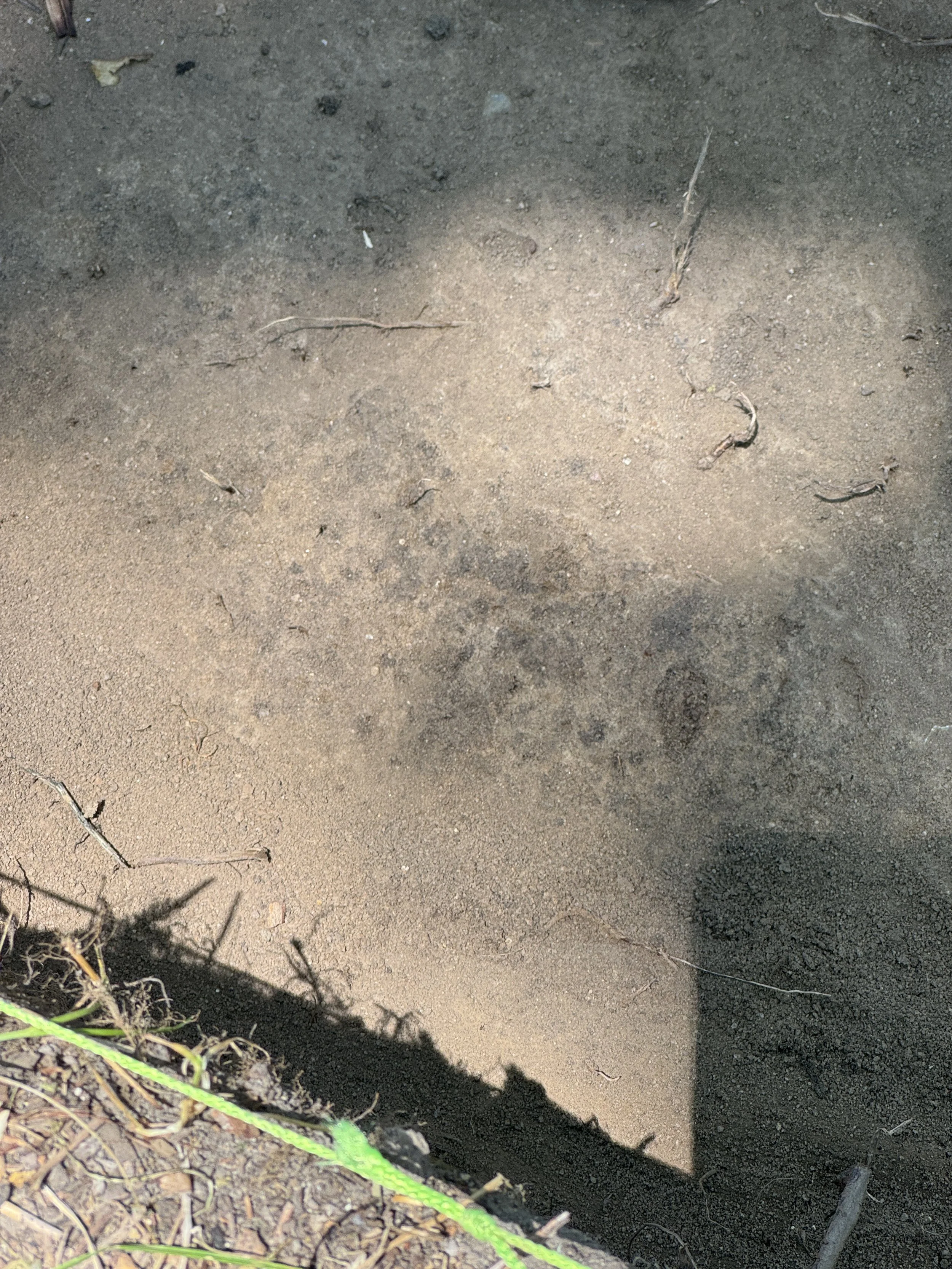
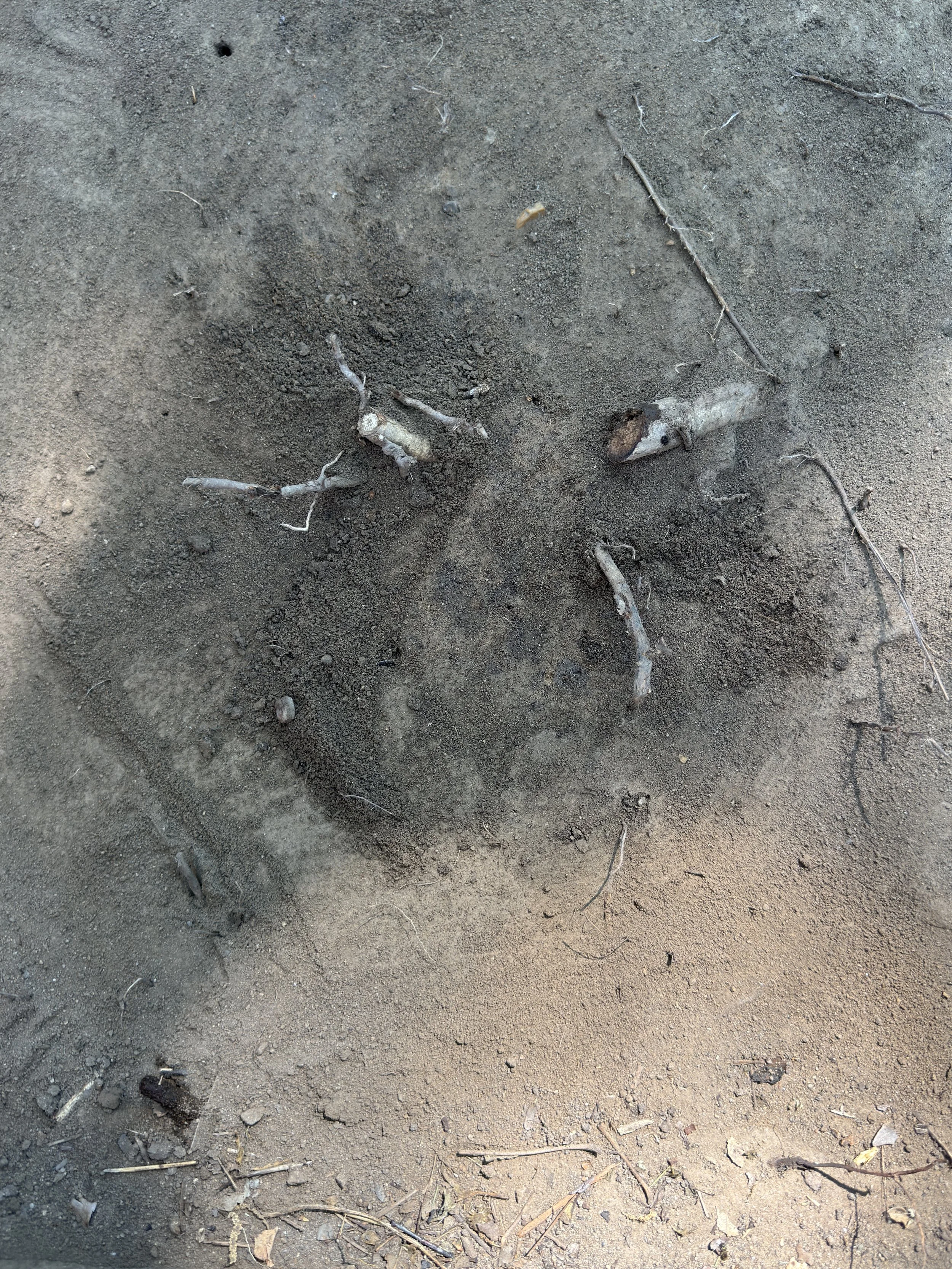
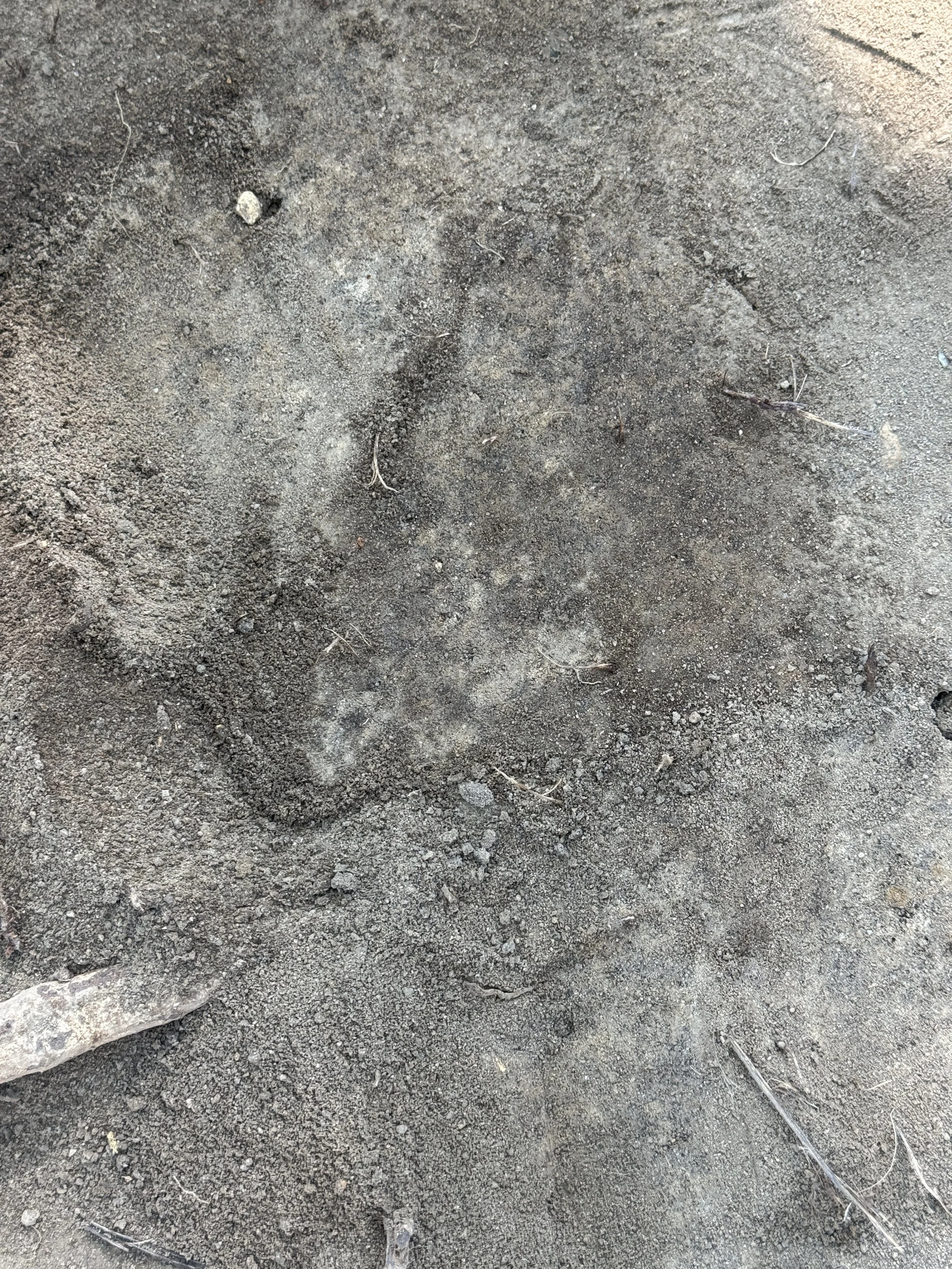
My unit turned out to almost entirely be an ash pit (fire pit). It’s difficult to see in the photos, but there are burn marks and discoloration in the dirt which is typical of an ash pit.
I won’t be part of the lab work, so I won’t get to know how old anything in the unit was. My amateurish guess was maybe a hundred years ago (based on how deep it was in the ground). But finding flakes on the same level as an ash pit was interesting, and the lead archaeologist thought they were older than hundred years.
I’ve never been happier to work
Archaeology tends to be underfunded and undervalued, particularly in North America. Public archaeology is a key part to bringing awareness to the community, and hopefully it leads to a respect for history, for the Indigenous communities who used to (and still do) live on the land, and for the environment.
It also gave me, an archaeology student, the chance to see how I feel about fieldwork before committing time (and money) to a whole field school. I’m happy I loved it, but even if I didn’t, I appreciated the accessibility to the field.
It’s my hope that hearing about my experience will convince you to sign up for a public archaeology dig, meet your local archaeologists, and connect with your community.
An additional note
The dig site is on the traditional territory of the Potawatomi and Ho-Chunk Nations.
I couldn’t find any evidence that the lead archaeologist was working with them during the dig. Ideally, if there is archaeology work done in North America, the relevant nations are in charge of the dig, or at least involved in every step of the process.
If you’re going to a public dig, ask whose land you’re digging on. If no one knows, do the research (native-land.ca is a good starting point).
